Where Is a Cemetery With the Most Norris Family Members Buried in It
| Laurel Hill Cemetery | |
| U.South. National Register of Historic Places | |
| U.Due south. National Historic Landmark | |
| Pennsylvania state historical marking | |
 Laurel Loma Cemetery Gatehouse | |
| | |
| Location | 3822 Ridge Avenue, Philadelphia, Pennsylvania |
|---|---|
| Coordinates | 40°00′14″Northward 75°xi′fifteen″West / twoscore.00389°N 75.18750°W / xl.00389; -75.18750 Coordinates: 40°00′14″Northward 75°11′xv″W / 40.00389°N 75.18750°Due west / 40.00389; -75.18750 |
| Built | 1836-1839[2] |
| Architect | John Notman[two] |
| Architectural style | Exotic Revival, Gothic, Classical Revival |
| NRHP referenceNo. | 77001185[1] |
| Significant dates | |
| Added to NRHP | Oct 28, 1977 |
| Designated PHMC | May 20, 2000[3] |
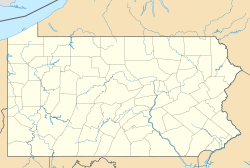

Laurel Hill Cemetery is a celebrated garden or rural cemetery in the East Falls neighborhood of Philadelphia. Founded in 1836, information technology was the 2d major rural cemetery in the United States after Mount Auburn Cemetery in Boston, Massachusetts.
The cemetery is 74-acre (300,000 m2) in size and overlooks the Schuylkill River. The cemetery grew to its current size through the purchase of 4 land parcels betwixt 1836 and 1861. It contains over 11,000 family unit lots and more than 33,000 graves, including many adorned with grand marble and granite funerary monuments, elaborately sculpted hillside tombs and mausoleums.[4]
In 1977, Laurel Hill Cemetery was listed on the National Register of Historic Places[v] and in 1998, became the starting time cemetery in the United States to be designated a National Historic Landmark.[6] [vii]
History [edit]

The cemetery was founded in 1836 by John Jay Smith,[viii] a librarian and editor with interests in horticulture and existent estate, who was distressed at the way his deceased daughter was interred at the Arch Street Coming together Business firm burying footing in Philadelphia. Smith wrote, "Philadelphia should have a rural cemetery on dry ground, where feelings should not exist harrowed by viewing the bodies of dear relatives plunged into mud and water."[nine]

Mausoleums along "Millionaire's Row"
Smith joined forces with other prominent Philadelphia citizens including Benjamin Wood Richards, William Strickland and Nathan Dunn to form the Laurel Loma Cemetery Company and create a rural cemetery three miles north of the Philadelphia border on the eastward bank of the Schuylkill River.[10] The group considered several locations simply decided on the 32 acre[4] former estate of man of affairs Joseph Sims[two] known equally "Laurel" or "Laurel Hill".[11] The location was viewed as a haven from urban expansion and a respite from the increasingly industrialized urban center center. The urban center later grew past Laurel Loma, but the cemetery retained its rural character.

The cemetery was designed by John Notman with strings of terraces that descend to the Schuylkill River
Designs for the cemetery were submitted past William Strickland and Thomas Ustick Walter[12] merely the commission selected Scottish-American architect John Notman.[two] Notman'due south designs incorporated the topography of the location and included a string of terraces that descended to the river.[12] The cemetery was developed and completed between 1836 and 1839.[2] Notman designed the gatehouse which consists of a massive Roman curvation surrounded by an imposing classical colonnade and topped with a large ornamental urn. A large Gothic Revival way chapel was built on the grounds only removed in the 1880s to brand room for additional graves.[12]

In 1836, the cemetery purchased a group of 3 sandstone statues from Scottish sculptor James Thom, known every bit Onetime Bloodshed. The statues were placed in a small enclosure in the cardinal courtyard straight in front of the master gatehouse. The statues are based on a tale by Sir Walter Scott and depict Scott talking to Erstwhile Mortality, an elderly man who traveled through the Scottish Highlands re-carving weathered tombstones, along with his pony.[13] A plaster bust of the artist, James Thom, was added to the brandish in 1872. The owners of the cemetery intended to equate the mission of Quondam Bloodshed with their own - to keep the cemetery in perpetual intendance so future generations may remember the deceased.[four]
To increase its cachet, the cemetery'due south organizers had the remains of several famous Revolutionary War figures moved there, including Continental Congress secretary Charles Thomson; Declaration of Independence signer Thomas McKean; Philadelphia war veteran and shipbuilder Jehu Eyre; hero of the Battle of Princeton, Hugh Mercer; and commencement director of the U.Southward. Mint, David Rittenhouse.
Many of the elaborate funerary monuments were designed past notable artists and architects including Alexander Milne Calder, Alexander Stirling Calder, Harriet Whitney Frishmuth and William Strickland. The monument design styles include Classical Revival, Gothic Revival and Egyptian Revival made out of materials such as marble, granite, bandage-iron and sandstone.
From its inception, Laurel Colina was intended as a civic establishment designed for public apply. In an era before public parks, museums and arboretums, it was a multi-purpose cultural attraction[14] where the general public could feel the art and refinement previously known but to the wealthy.[15] Past the 1840s, Laurel Hill was an immensely popular destination and required tickets for admission. Writer Andrew Jackson Downing reported "almost xxx,000 persons…entered the gates betwixt Apr and December, 1848."
In 1844, due to increasing popularity, Laurel Hill purchased the 27-acre former estate of jurist William Rawle, half a mile south and named it South Laurel Loma.[4] In 1849, a set of iron gates on sandstone piers was built in the southeastern corner of the cemetery and served as a secondary entrance.[iv]

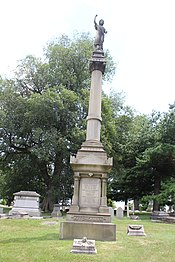
In 1855, the Pennsylvania State Assembly authorized the cemetery to purchase an additional 10 acres from Frederick Stoever known as the Stoever Tract. The Yellow Fever Monument was built in this section in 1859 to award the "Doctors, Druggists and Nurses" who helped fight the epidemic in Portsmouth, Virginia.[16]
In 1860, Laurel Hill Cemetery had an estimated 140,000 people visit annually.[17]
In 1861, the 21-acre manor of George Pepper between the two cemeteries was purchased and named Key Laurel Hill.[iv] With these additions, the cemetery reached the current size of approximately 95 acres. A span was congenital over Hunting Park Artery to connect Cardinal and Southward Laurel Hill.[18]
The cemetery association restricted who could buy lots and the majority of burials were for white Protestants. The cemetery discouraged unmarried people from buying lots in club to keep the cemetery as a family destination.[19]
During and after the American Civil War, Laurel Loma became the final resting identify of hundreds of military machine figures, including 40 Civil War-era generals. Laurel Hill also became the favored burial identify for many of Philadelphia'due south most prominent political and business organisation figures, including Matthias W. Baldwin, founder of the Baldwin Locomotive Works; Henry Disston, possessor of the largest saw factory in the world (the Disston Saw Works); and financier Peter A. B. Widener.[9]

Laurel Colina Cemetery Advertisement from 1904
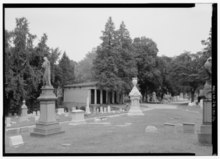
The terra cotta receiving vault in South Laurel Hill was built in 1913[4]
In 1913, a Doric receiving vault made of terra cotta was built in South Laurel Hill nearly the bridge connecting information technology to Primal Laurel Hill.[4]
By the 1970s, Laurel Loma Cemetery had fallen out of favor every bit a burial site. Many bodies were re-interred at the more than suburban West Laurel Loma Cemetery in nearby Lower Merion, Pennsylvania and the remaining graves suffered neglect, vandalism and criminal offence.[20]
In 1973, Laurel Colina updated its policy and removed the prohibition on the burial of African-Americans in the cemetery.[21]
In 1978, the Friends of Laurel Hill Cemetery, a 501(c)(3) non-profit organisation, was founded past descendants of John Jay Smith to back up the cemetery.[ix] The mission of the Friends is to assist the Laurel Hill Cemetery Company in preserving and promoting the historical character of Laurel Hill. The Friends enhance funds and seek contributed services; ready educational and research materials emphasizing the historical, architectural and cultural importance of Laurel Hill Cemetery; and provide tour guides to educate the public. The organization was instrumental in Laurel Hill Cemetery's placement on the National Register of Celebrated Places in 1977 and designation equally a National Historic Landmark in 1998.[ix]

"The Silent Sentry" was stolen from Mount Moriah Cemetery in 1970 but was moved and rededicated in Laurel Hill in 2013.
In 2013, an 1883 bronze statue of a Civil State of war soldier was moved to Laurel Hill Cemetery. Cast at the Bureau Brothers Foundry, "The Silent Scout" weighs 700 pounds and stands seven feet, 2 inches loftier. It was installed in 1883 at the Soldiers' Home of Philadelphia burying plot in Mount Moriah Cemetery. In 1970, thieves removed the statue from its base of operations and attempted to sell it as bit metallic to a scrap m in Camden, New Jersey, just the flake dealer notified the authorities.[22] It was recovered and repaired by the Military Order of the Loyal Legion of the United States. In 2013, the statue was installed and rededicated in Laurel Loma Cemetery.[23]
Today, Laurel Loma Cemetery is a popular tourist destination that attracts thousands of visitors every twelvemonth for historical tours, concerts, and concrete recreation.[24]
Notable burials [edit]
- Robert Adams Jr. (1849–1906), U.S. Congressman
- Oscar Allis, M.D. (1838–1921), surgeon, inventor of the Allis clamp
- Hilary Baker (1746–1798), mayor of Philadelphia

- Matthias Due west. Baldwin (1795–1866), founder of Baldwin Locomotive Works
- John Rhea Barton (1794-1871), surgeon, namesake of Barton'south fracture
- Alexander Biddle (1819–1899), Union Ground forces officer in the U.S. Civil War
- Henry H. Bingham (1841–1912), brevet brigadier general, Medal of Honor recipient
- Robert Montgomery Bird (1803–1854), American novelist, playwright, and doc
- David Bispham (1857–1921), opera singer
- George A.H. Blake (1810–1884), cavalry officer in the U.Southward. Regular army
- Charles E. Bohlen (1904–1974), U.Due south. diplomat
- Francis Bohlen (1868–1942), legal scholar at the University of Pennsylvania

- Henry Bohlen (1810–1862), Ceremonious War Union brigadier general
- George Henry Boker (1823–1890), poet, playwright, and diplomat
- Joseph Bonnell (1802–1840), W Signal graduate, hero of the Texas Revolution
- Adolph East. Borie (1809–1880), Secretary of the Navy
- John Bouvier (1781–1851), jurist and legal lexicographer
- Charles Brownish (1797–1883), U.S. Congressman
- George Bryan (1731–1791), colonial Pennsylvania man of affairs and politico
- Lewis C. Cassidy (1829-1889), Pennsylvania Land Attorney General
- John Cassin (1813–1869), ornithologist
- George William Childs (1829–1894), newspaper publisher
- Thomas Clyde (1812–1885), founder of the Clyde Line of steamers
- William P. Clyde (1839–1923), American shipping magnate
- Meredith Colket (1878–1947), Silver Medal winner pole vault, 1900 Summer Olympics
- Walter Colton (1797–1851), Clergyman, Alcalde of Monterey, writer, publisher of California's first newspaper
- David Conner (1792–1856), U.Southward. naval officer
- Robert T. Conrad (1810–1858), mayor of Philadelphia
- Joel Melt (1842–1910), U.S. Congressman
- Robert Cornelius (1809–1893), pioneering photographer
- Martha Coston (1826–1904), inventor and baron
- Thomas Jefferson Cram (1804–1883), engineer in the U.S. Corps of Topographical Engineers
- Samuel W. Crawford (1829–1892), Ceremonious War Union army full general
- Alexander Cummings (1810–1879), third Governor of the Territory of Colorado
- Louisa Knapp Curtis (1851–1910), journalist and magazine publisher
- John A. Dahlgren (1809–1870), U.Southward. naval officeholder, inventor of the Dahlgren gun
- Ulric Dahlgren (1842–1864), Matrimony Regular army Captain during the Civil War, namesake of The Dahlgren Affair
- Richard Dale (1756–1826), Revolutionary War naval officer
- Henry Deringer (1786–1868), gunsmith
- Franklin Archibald Dick (1823–1885), attorney, politician and armed forces officer
- Hamilton Disston (1844–1896), industrialist and existent-estate developer

The Henry Disston family mausoleum is the largest monument in Laurel Hill[25]
- Henry Disston (1819–1878), man of affairs, Disston Saw Works
- Ida Dixon (1854–1916), socialite and start female person golf course architect in the The states
- Percival Drayton (1812–1865), U.S. Navy officer
- William Drayton (1776–1846), pol, broker and author
- William Duane (1760–1835), journalist
- William Duane (1872–1935), physicist
- William J. Duane (1780–1865), U.S. Secretarial assistant of the Treasury in 1833
- Frank Dumont (1848-1919), minstrel performer and entrepreneur, wrote "The Witmark Amateur Minstrel Guide and Burnt Cork Encyclopedia"
- Stephen Duncan (1787–1867), Mississippi planter and banker
- Robley Dunglison, (1798–1869), "Father of American Physiology"
- Nathan Dunn (1782–1844), businessman, philanthropist and sinology pioneer
- John Toll Durbin (1800–1876), Chaplain of the Senate and president of Dickinson College
- George Meade Easby (1918–2005), groovy-grandson of General George Meade and a celebrity figure
- George Nicholas Eckert (1802–1865), U.Southward. Congressman
- William Lukens Elkins (1832–1903), businessman, inventor, art collector
- Charles Ellet Jr. (1810–1862), civil engineer
- Charles Rivers Ellet (1843–1863), Colonel in the Union Regular army during the U.Southward. Civil War
- Alfred Fifty. Elwyn (1804–1884), Doctor and pioneer in the education of the mentally disabled
- Jehu Eyre (1738–1781), businessman, veteran of the French and Indian War and American Revolutionary War
- Wes Fisler (1841–1922), professional person baseball game role player, nickname "The Icicle"
- Edwin Henry Fitler (1825–1896), 75th mayor of Philadelphia
- Wilmot Due east. Fleming (1916–1978), Pennsylvania State Representative and Senator
- Robert H. Foerderer (1860–1903), U.S. Congressman
- Stanley Hamer Ford (1877–1961), U.South. Ground forces general
- Adam Forepaugh (1831–1890), an entrepreneur, businessman, and circus possessor
- Anne Francine (1917–1999) extra and cabaret singer
- Samuel Gibbs French (1818–1910), Confederate major general has a cenotaph in his family's plot in Laurel Hill.

- Harriet Whitney Frishmuth (1880–1980), sculptor
- A.B. Frost (1851–1928) illustrator, graphic artist and comics writer
- Frank Furness (1839–1912), builder, Medal of Honor recipient
- Horace Howard Furness (1833–1912), American Shakespearean scholar
- William Henry Furness (1802–1896), American clergyman, theologian, Transcendentalist, abolitionist, and reformer
- William Evans Garrett Gilmore (1895–1969), Olympic rower 1924 Summer Olympics, 1932 Summer Olympics
- Charles Gilpin (1809–1891), Mayor of Philadelphia from 1851 to 1854
- Henry D. Gilpin (1801–1860), U.S. Chaser Full general
- Joshua Gilpin (1765–1840), paper manufacturer
- Louis Antoine Godey (1804–1878), American editor and publisher
- Thomas Godfrey (1704–1749), optician and inventor
- Sylvanus William Godon (1809–1879), U.Due south. Naval officer
- Frederick Graff (1775–1847), hydraulic engineer, designer of the Fairmount Water Works
- George Male monarch Graham (1813–1894), Magazine editor and publisher
- Frederick Gutekunst (1831–1917), prominent photographer
- Henry Schell Hagert (1826–1885), Philadelphia district attorney
- Sarah Josepha Hale (1788–1879), author, poet
- Frederick Halterman (1831–1907), U.Due south. Congressman
- James Harper (1780–1873), U.South. Congressman
- Ferdinand Rudolph Hassler (1770–1843), first superintendent of the United States Coast Survey
- Joseph Hemphill (1770–1842), U.S. Congressman
- Alexander Henry (1823–1883), mayor of Philadelphia from 1858 to 1865
- Henry Wilson Hodge (1865–1919), engineer
- Lucy Hamilton Hooper (1835-1893), poet, journalist, editor and playwright

Tombstone of Isaac Hull, Commodore in the U.South. Navy
- Isaac Hull (1773–1843), Commodore, USN, captained Constitution to victory over HMS Guerriere
- Caroline Furness Jayne (1873–1909) American ethnologist, expert in children's game cat'south cradle
- Horace Jayne (1859-1913), zoologist and educator; the Horace Jayne House is on the National Register of Historic Places
- Owen Jones (1819–1878), U.S. Congressman
- James Juvenal (1874–1942), Olympic rower, 1900 Summer Olympics, 1904 Summer Olympics

- Harry Kalas (1936–2009), Philadelphia Phillies Hall of Fame broadcaster
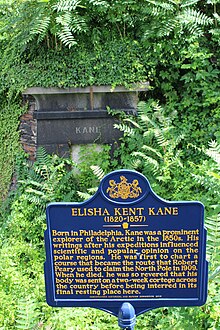
- Elisha Kent Kane (1820–1857), polar explorer
- John M. Kane (1795–1858), U.S. District Judge, Chaser General of Pennsylvania
- William D. Kelley (1814–1890), U.Southward. Congressman
- Florence Kelley (1859–1932), social and political reformer
- Samuel George King (1816–1899), 73rd mayor of Philadelphia
- William J. Kirkpatrick (1838–1921), composer
- James Kitchenman (1825–1909), material manufacturer
- Lon Knight (1853–1932), professional baseball game player
- Elie A. F. La Vallette (1790–1862), U.Due south. Navy, i of showtime rear admirals appointed in 1862

- Henry Charles Lea (1825–1909), historian
- Isaac Lea (1792–1886), conchologist, geologist and publisher
- Mathew Carey Lea (1823–1897), chemist and lawyer, father of mechanochemistry
- Mary Ann Lee (1823-1899), professional ballerina
- Michael Leib (1760–1822), U.Due south. Congressman
- Thomas Leiper (1745–1825), American Revolutionary State of war veteran, first American to construct a permanent working railway
- Lewis Charles Levin (1808–1860), U.S. Congressman
- Rachel Lloyd (1839–1900), first U.S. adult female to receive Ph.D. in chemistry
- George Horace Lorimer (1868–1937), editor-in-primary of The Saturday Evening Post, hired creative person Norman Rockwell
- Harry Luff (1856–1916), Major League Baseball player
- Anna Lukens (1844–1917), md
- Charles Macalester (1798–1873), businessman, Presbyterian Church philanthropist, and namesake of Macalester College
- Alexander Kelly McClure (1828–1909), Pennsylvania State Senator
- George Deardorff McCreary (1846–1915), U.S. Congressman
- Thomas McKean (1734–1817), lawyer and politician, Signer of the Declaration of Independence
- Morton McMichael (1807–1879), editor The Sat Evening Post, publisher The North American, veteran American Ceremonious War. Mayor of Philadelphia (1866-1869)

- George Gordon Meade (1815–1872), Ceremonious State of war Matrimony Army major general, victor at the Battle of Gettysburg
- Charles Delucena Meigs (1792–1869), American obstetrician who opposed anesthesia
- George Wallace Melville (1841–1912), U.S. Navy Admiral, engineer, Arctic explorer, author

Hugh Mercer, full general in the Continental Army, was reinterred in Laurel Hill Cemetery
- Hugh Mercer (1726–1777), Continental general in the American Revolution
- Samuel Mercer (1799–1862), Union naval officeholder
- Helen Abbott Michael (1857–1904), plant chemist
- Charles Karsner Mills, Yard.D. (1845–1930), "dean of American neurology"
- William Millward (1822–1871), U.S. Congressman
- E. Coppée Mitchell (1836–1887), Professor and Dean of the University of Pennsylvania Law School
- John Moffet (1831–1884), U.Due south. Congressman-elect
- Edward Joy Morris (1815–1881), U.Southward. Congressman
- James St. Clair Morton (1829–1864), Wedlock Army full general in the Ceremonious State of war
- Samuel George Morton (1799–1855), doctor, natural scientist and writer
- Alexander Murray (1755–1821), American officer during the Revolutionary War
- Henry Morris Naglee (1815–1886), Union Army general during the U.Due south. Ceremonious War
- Charles Naylor (1806–1872), U.S. Congressman
- Matthew Newkirk (1794–1868), man of affairs, railroad president
- Albert Newsam (1809-1864), famed deafened artist who created paintings and drawings, including portraits
- Thaddeus Norris (1811–1877), "Uncle Thad," the "Begetter of American Fly Fishing"
- John Notman (1810–1865), architect and designer of Laurel Loma
- Joshua T. Owen (1822–1887), Union brigadier general during the Civil War
- Francis E. Patterson (1821–1862), Matrimony general in the Ceremonious War
- Robert Patterson (1792–1881), Irish-born Us major general during the American Civil State of war
- Franklin Peale (1795–1870), 3rd chief coiner at United States Mint at Philadelphia
- Titian Peale (1799–1885), artist
- John C. Pemberton (1814–1881), Confederate Civil State of war general
- Garrett J. Pendergrast (1802–1862), U.S. Ceremonious War naval officer
- Mary Engle Pennington (1872–1952), U.S. scientist and refrigeration pioneer
- Boies Penrose (1860–1921), U.Due south. Senator
- Charles B. Penrose (1798–1857), Pennsylvania State Senator and Solicitor of the U.S. Treasury
- Charles Bingham Penrose (1862–1925), physician, inventor of Penrose Drain
- William Pepper (1843–1898), physician, Provost of University of Pennsylvania, founder Free Library of Philadelphia
- Charles Jacobs Peterson (1818–1887), author, publisher Peterson's Magazine
- Hannah Mary Bouvier Peterson (1811–1870), writer of "Bouvier's Familiar Astronomy" and The Young Wife'due south Cookbook
- Henry Peterson, (1818–1891) editor for The Sat Evening Mail, novelist, poet, playwright, and abolitionist
- Alonzo Potter (1800–1865), third Episcopal bishop of the Diocese of Pennsylvania
- Samuel J. Randall (1828–1890), U.S. Congressman
- George C. Read (1788–1862), U.S. Naval officer
- Thomas Buchanan Read (1822–1872), American poet, sculptor, portrait-painter
- Joseph Reed (1741–1785), Continental Congressman
- John East. Reyburn (1845–1914), U.S. Congressman, mayor of Philadelphia
- William Southward. Reyburn (1882–1946), U.S. Congressman
- Benjamin Wood Richards (1797–1851), mayor of Philadelphia
- Jacob Ridgway (1768–1843), merchant and diplomat
- David Rittenhouse (1732–1796), astronomer, inventor, mathematician, surveyor
- John Robbins (1808–1880), U.S. Congressman
- Moncure Robinson (1802–1891), civil engineer and railroad planner
- Fairman Rogers (1833–1900), civil engineer, educator and philanthropist
- William Ronckendorff (1812–1891), U.S. Naval officer
- Richard Rush (1780–1859), U.S. Chaser Full general
- John Morin Scott (1789–1858), mayor of Philadelphia from 1841 to 1844
- John Sergeant (1779–1852), U.South. Congressman and 1832 Republican vice presidential nominee
- Jonathan Dickinson Sergeant (1746–1793), Continental Congressman
- Adam Seybert (1773–1825), U.S. Congressman
- George Sharswood (1810–1883) Pennsylvania jurist, Chief Justice of the Supreme Court of Pennsylvania
- William M. Singerly (1832–1898), businessman and newspaper publisher
- Charles Ferguson Smith (1807–1862), Ceremonious War Union Army general
- John Rowson Smith (1810–1864), panorama painter
- John T. Smith (1801–1864), U.Southward. Congressman for Pennsylvania'southward third congressional district from 1843 to 1845
- Persifor Frazer Smith (1798–1858), U.S. Army officer
- John Batterson Stetson (1830–1906), hat manufacturer, reinterred to Westward Laurel Hill Cemetery[xx]
- William S. Stokely (1823–1902), 72nd mayor of Philadelphia
- Witmer Stone (1866–1939), ornithologist, botanist
- Alfred Sully (1820–1879), soldier, painter, player
- Thomas Sully (1783–1872), portrait painter
- William Swaim (1781–1846), inventor of Swaim's Panacea
- Charles Thomson (1729–1824), secretary of the Continental Congress
- George Washington Toland (1796–1869), U.S. Congressman
- Laura Matilda Towne (1825–1901), abolitionist and educator
- George Alfred Townsend (1841–1914), Ceremonious War correspondent, author

- Levi Twiggs (1793–1847), U.Southward. Marine Corps officer
- Hector Tyndale (1821–1880), Union full general during the American Ceremonious War and protector of the married woman of abolitionist John Brown
- Job Roberts Tyson (1803–1858), U.S. Congressman
- Pinkerton R. Vaughn (1841-1866), Medal of Honour recipient
- Richard Vaux (1816–1895), U.S. Congressman, mayor of Philadelphia
- William Sansom Vaux (1811-1852), mineralogist
- Thomas Ustick Walter (1804–1887), architect
- Joseph Wharton (1826–1909), American industrialist who founded the Wharton Schoolhouse at the University of Pennsylvania, co-founded the Bethlehem Steel company, and was one of the founders of Swarthmore College
- Jonathan Williams (1751–1815), U.S. Regular army officer and first superintendent of Due west Point
- Eleanor Elkins Widener (1861/1862–1937), wife of George Dunton Widener, survivor of RMS Titanic sinking, responsible for Harry Elkins Widener Library at Harvard University
- George D. Widener Jr. (1889–1971), thoroughbred racehorse owner
- Joseph E. Widener (1871–1943), thoroughbred owner/breeder

- Peter A. B. Widener (1834–1915), business tycoon, philanthropist
- John Rhea Barton Willing (1864–1913), music enthusiast and violin collector
- Isaac J. Wistar (1827–1905), Union Army general and penologist
- Langhorne Wister (1834–1891), Union Army officer
- Owen Wister (1860–1938), novelist, author of The Virginian
- Jacob Zeilin (1806–1880), 7th Commandant of the U.S. Marine Corps, Marine Corps'south first general officer
- J. Fred Zimmerman Jr. (1871–1948), theatre manager and phase producer
- J. Fred Zimmerman Sr. (1843–1925), theatre magnate
In popular culture [edit]

Headstone for the fictional character Adrian Balboa from the Rocky film franchise
- Tombstones for the fictional characters Adrian Balboa and Paulie Pennino from the Rocky movies sit down almost the main gatehouse.[28] The Adrian Balboa tombstone was used as a prop in the 2006 movie Rocky Balboa and both were used in the 2015 movie Creed.[29] In the films, Rocky visits the gravesites in the cemetery's South Laurel Hill section.[26]
- In 2009, Laurel Hill was a moving picture location for the films Transformers: Revenge of the Fallen [30] and Police Constant Citizen.[31]
- The 2009 young adult book Tombstone Tea [32] by Joanne Dahme takes identify in Laurel Colina Cemetery and some of the well-known people buried there, such every bit Adam Forepaugh and Elisha Kent Kane, appear every bit characters.
Gallery [edit]
-

The Mother and Twins Monument was carved by Polish sculptor Henry Dmochowski-Saunders. It depicts his deceased married woman Helena Schaff and their two deceased children[34]
-

Sculpture on William Warner memorial by Alexander Milne Calder depicting a adult female releasing a soul from a sarcophagus[18]
-
-
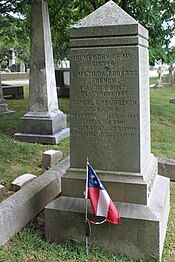
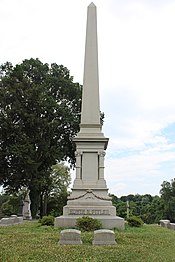
Samuel Gibbs French was a Confederate Army major general. He is buried in Florida but his family unit built this cenotaph to him in Laurel Hill.
-
See also [edit]
- West Laurel Hill Cemetery
- List of United States cemeteries
Notes [edit]
- ^ "National Register Information System". National Annals of Historic Places. National Park Service. January 23, 2007.
- ^ a b c d east "General View of Laurel Hill Cemetery". The Library Visitor of Philadelphia. World Digital Library. Retrieved 5 January 2014.
- ^ "PHMC Historical Markers". Historical Marker Database. Pennsylvania Historical & Museum Committee. Archived from the original on December 7, 2013. Retrieved December x, 2013.
- ^ a b c d east f 1000 h National Historic Landmark Nomination, Aaron Five. Wunsch, National Park Service, 1998.
- ^ "NPGallery Digital Asset Management System". www.npgallery.nps.gov. National Park Service. Retrieved 7 July 2020.
- ^ Listing Archived 2011-06-06 at the Wayback Motorcar at the National Park Service
- ^ "Laurel Hill Cemetery". www.associationforpublicart.org . Retrieved ane July 2020.
- ^ Tatman, Sandra L. "Smith, John Jay (1798 - 1881)". Philadelphia Architects and Buildings . Retrieved 29 Oct 2019.
- ^ a b c d Keels 2003, p. 21.
- ^ Keels 2003, p. 22.
- ^ Yaster 2017, p. 15.
- ^ a b c Keels 2003, p. 23.
- ^ Smith 1852, pp. 39–44.
- ^ Keels 2003, p. 27.
- ^ Douglas, Ann, The Feminization of American Culture, 1977, New York, Alfred A. Knopf, pp. 208-213. [1]
- ^ a b Report of the Philadelphia Relief Committee. Philadelphia: Inquirer Printing Office. 1856. pp. ane–v. Retrieved 13 July 2020.
- ^ Yalom, Marilyn (2008). The American Resting Place: Four Hundred Years of History Through Our Cemeteries and Burial Grounds . Houghton Mifflin Harcourt. p. 103. ISBN978-0-618-62427-0.
- ^ a b Keels 2003, p. thirty.
- ^ Keels 2003, p. 26.
- ^ a b Keels 2003, p. 33.
- ^ Herr-Cardillo, Starr. "The burial ground of Marian Anderson crowdfunds to preserve Black history". world wide web.whyy.org. WHYY. Retrieved 5 May 2021.
- ^ "The Silent Lookout man will at present stand watch in Laurel Hill Cemetery". world wide web.civilwarcavalry.com . Retrieved 26 July 2020.
- ^ ""Silent Sentry" historic Civil War memorial statue moved to Laurel Loma Cemetery". www.montgomerynews.com. The Review. Retrieved 25 July 2020.
- ^ Yaster 2017, p. eight.
- ^ a b Keels 2003, p. 31.
- ^ a b Akintoye, Dotun. "Why does Rocky's married woman become a tombstone at Laurel Loma?". world wide web.mycitypaper.com . Retrieved 6 July 2020.
- ^ "Cleo - Laurel Hill Cemetery". www.waymarking.com . Retrieved ane July 2020.
- ^ Baskin, Ben. "Rocky Gets Right: How Creed (and Michael B. Jordan) Requite the Battle Franchise New Life". www.si.com. Sports Illustrated. Retrieved 26 July 2020.
- ^ "Creed (2015) Filming Locations". www.findagrave.com . Retrieved 11 July 2020.
- ^ "Transformers: Revenge of the Fallen". www.picture show-locations.com . Retrieved ane July 2020.
- ^ Elijah, Andy. "Philly Flix: Law Abiding Denizen". www.cinedelphia.com . Retrieved 26 July 2020.
- ^ Tombstone Tea Amazon listing Amazon.com. Retrieved 5 Oct 2009.
- ^ Mullen Tomb December 26, 1881 article from the New York Times.
- ^ Keels 2003, p. 32.
References [edit]
- Keels, Thomas H. (2003). Philadelphia Graveyards & Cemeteries. Arcadia Publishing. ISBN0-7385-1229-X.
- Smith, R.A. (1852). Smith's Illustrated Guide to and through Laurel Loma Cemetery. Willis P. Chance.
- Warner, Ezra (1964). Generals in Bluish: The Lives of the Union Commanders. Louisiana Country University Press. ISBN0-8071-0822-7. LCCN 64-21593.
- Yaster, Carol (2017). Laurel Colina Cemetery. Arcadia Publishing. ISBN978-1-4671-2655-7.
External links [edit]
- Official website
- Historic American Buildings Survey, Laurel Hill Cemetery, HABS No. PA-1811 (Adobe .pdf format)
- Laurel Loma Cemetery at Find A Grave
- Laurel Hill Cemetery sculptures, Association for Public Fine art website
- From the collection of The Library Company of Philadelphia:
-
- Laurel Hill Cemetery, Philadelphia, 1840
- General View of Laurel Hill Cemetery, ca. 1847
Source: https://en.wikipedia.org/wiki/Laurel_Hill_Cemetery
0 Response to "Where Is a Cemetery With the Most Norris Family Members Buried in It"
Post a Comment